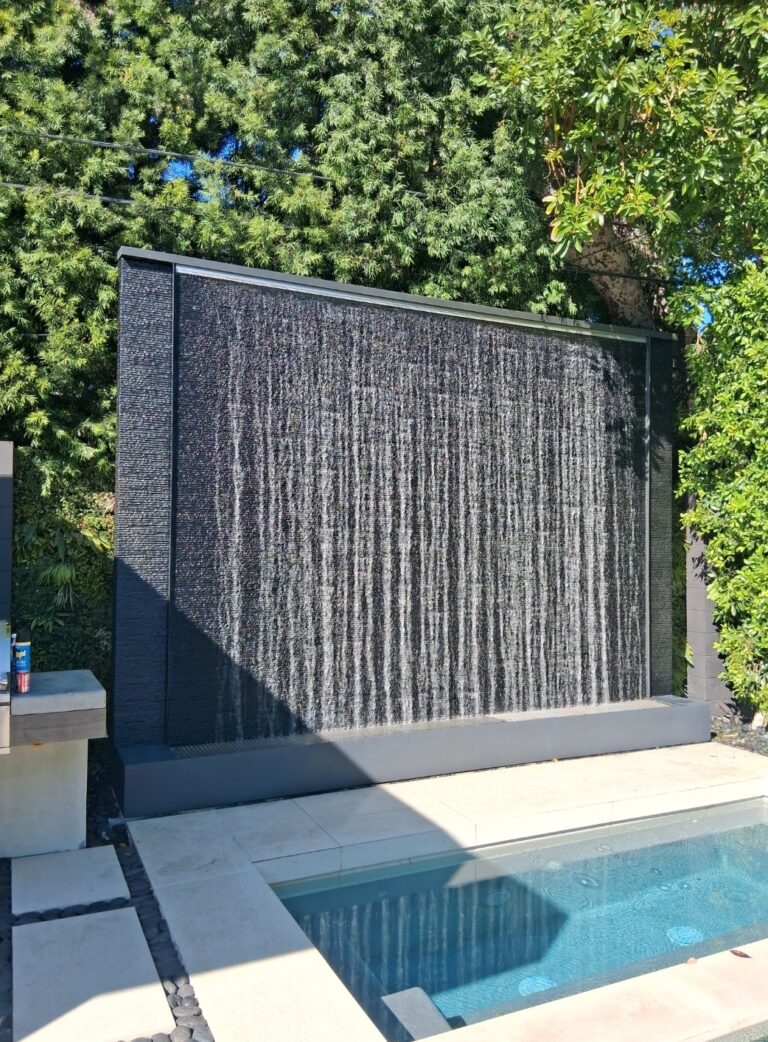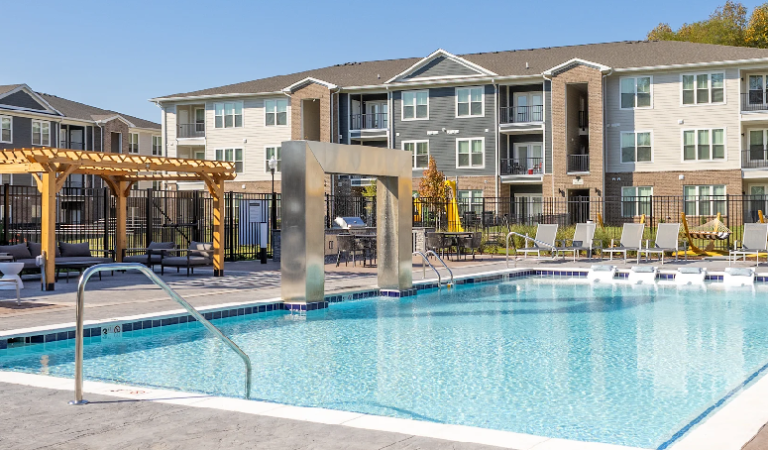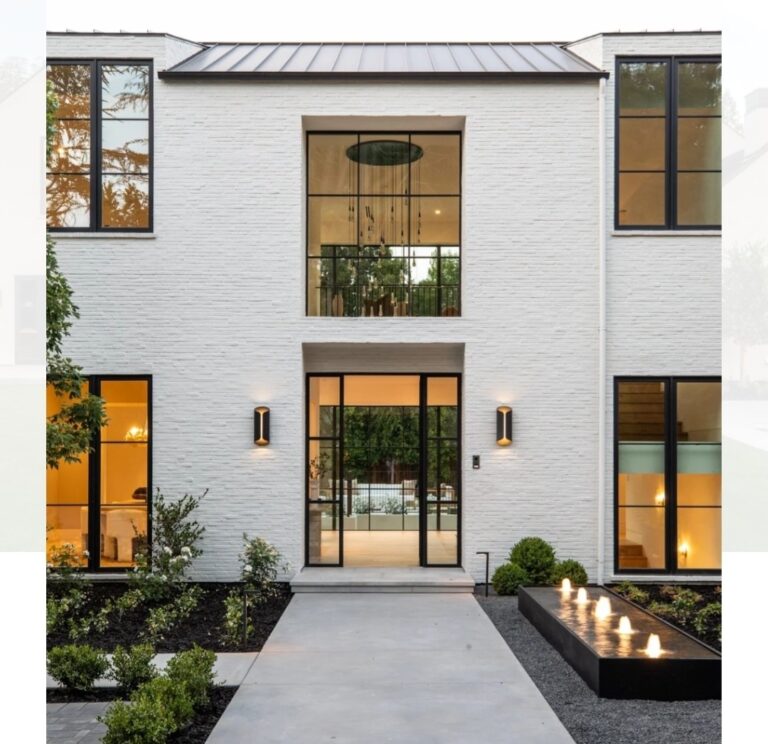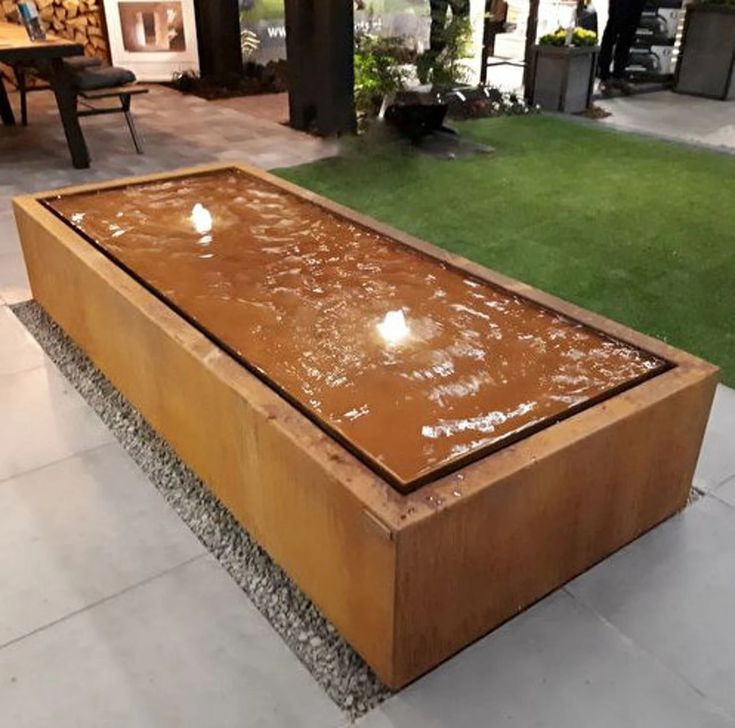
If you’ve ever shown a client a Corten water feature and watched their face when you told them it was going to rust — this post is for you to send them.
Corten is one of my favorite materials to work with. It’s also the one that generates the most questions, the most hesitation, and occasionally the most panicked phone calls. Most of that comes down to one thing: people don’t know what to expect. So let me walk you through exactly what happens to Corten from the day it leaves my shop to two years after installation — what’s normal, what’s a problem, and what you need to tell your clients upfront.
How I got here — and why I switched from mild steel
Before I started working with Corten, I was building water features out of mild steel and simply letting it rust. It looked the part, at least for a while. The problem is that mild steel doesn’t stop rusting — it rusts all the way through. I was getting calls from clients whose features were deteriorating from the inside out, and I was replacing water features that should have lasted decades.
Corten — also called weathering steel, or by the trademark name COR-TEN — was developed specifically to solve that problem. It forms a stable, tightly-adhered rust layer called a patina that actually seals the surface and slows further corrosion dramatically. The rust becomes the protection. That’s the whole point of the material.
It’s been used on industrial buildings, bridges, and sculptures for decades for exactly this reason. The catch is that it was designed for environments with intermittent wet and dry cycles — rain comes, steel gets wet, rain stops, steel dries out. That drying period is what allows the patina to stabilize properly.
Water features don’t work that way. Water runs across the surface continuously. There’s no drying cycle. That accelerates the patina process and creates some maintenance considerations that you need to plan for upfront — which is what the rest of this post covers.
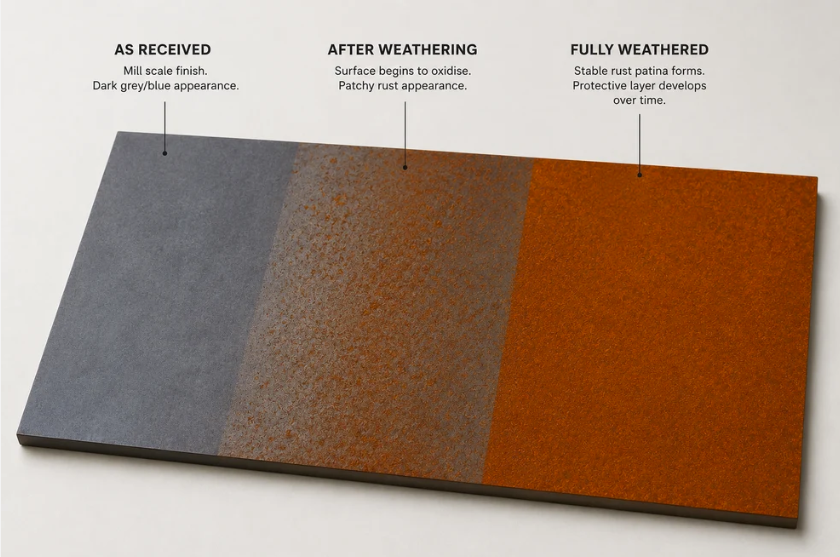
What Corten looks like when it arrives — and why we pre-rust everything
Here’s something that surprises a lot of contractors the first time they work with us: fresh Corten straight from the steel supplier looks almost identical to regular mild steel. It’s a dull gray-brown. There’s no orange patina, no dramatic rust color. If we shipped it that way, you’d look at it and wonder what you paid for.
Left to its own devices outdoors, Corten takes three to six months to develop even a decent early patina. In a dry climate like Arizona, it can take longer. That’s not a good client experience — especially when the feature is the centerpiece of a landscape design and it looks like unfinished steel for the first half of the year.
So we jumpstart the process in the shop. Every Corten water feature we build gets pre-rusted before it ships. We accelerate the patina intentionally so that when it arrives on site, it already has the orange-brown color your client is expecting. They’re not waiting six months to see the material do what they paid for.
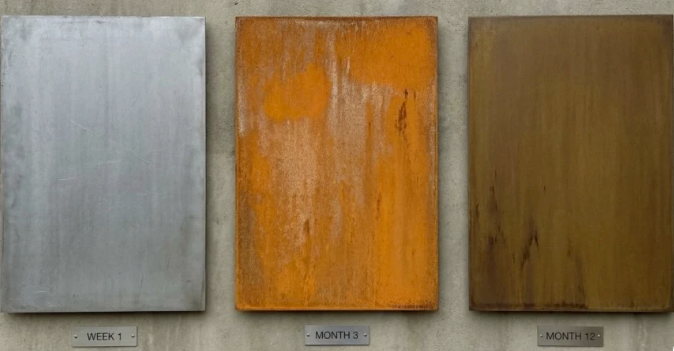
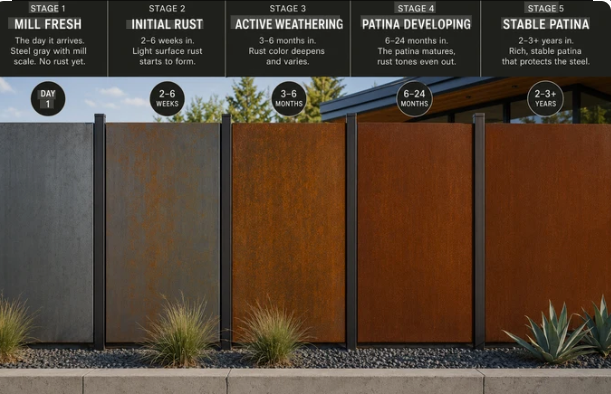
The patina timeline: what’s happening and when
Even with pre-rusting, the material keeps changing after installation. Here’s what to tell your clients to expect:
Day 1 — Delivery
The feature arrives with an orange-brown patina from our pre-rust process. It looks like Corten. This is intentional.
Months 1–3
The patina continues to develop. Color will deepen and shift — more orange early on, moving toward a richer brown. Depending on climate and how much water is running, the surface will look different week to week. This is normal. The material is doing what it’s supposed to do.
Months 3–6
The patina starts to stabilize in drier or more controlled environments. In wetter climates or on features running high water volumes continuously, the surface will remain more active. You may see loose rust flaking off — this is the early patina layer shedding as the stable layer forms underneath. Normal.
Months 6–12
Color continues to deepen toward a dark, warm brown. The surface texture becomes more pronounced. Runoff color will be most intense during this period — more on that below.
Year 1–2
The patina approaches its mature appearance. The rate of change slows significantly. The color settles into the rich dark brown that Corten is known for. On a water feature running continuously, this process takes longer than on a building facade because the constant water exposure keeps the surface more active.
Year 2 and beyond
A well-maintained Corten water feature at this stage should look stable and intentional. The patina is doing its job. Changes from here are slow and subtle.
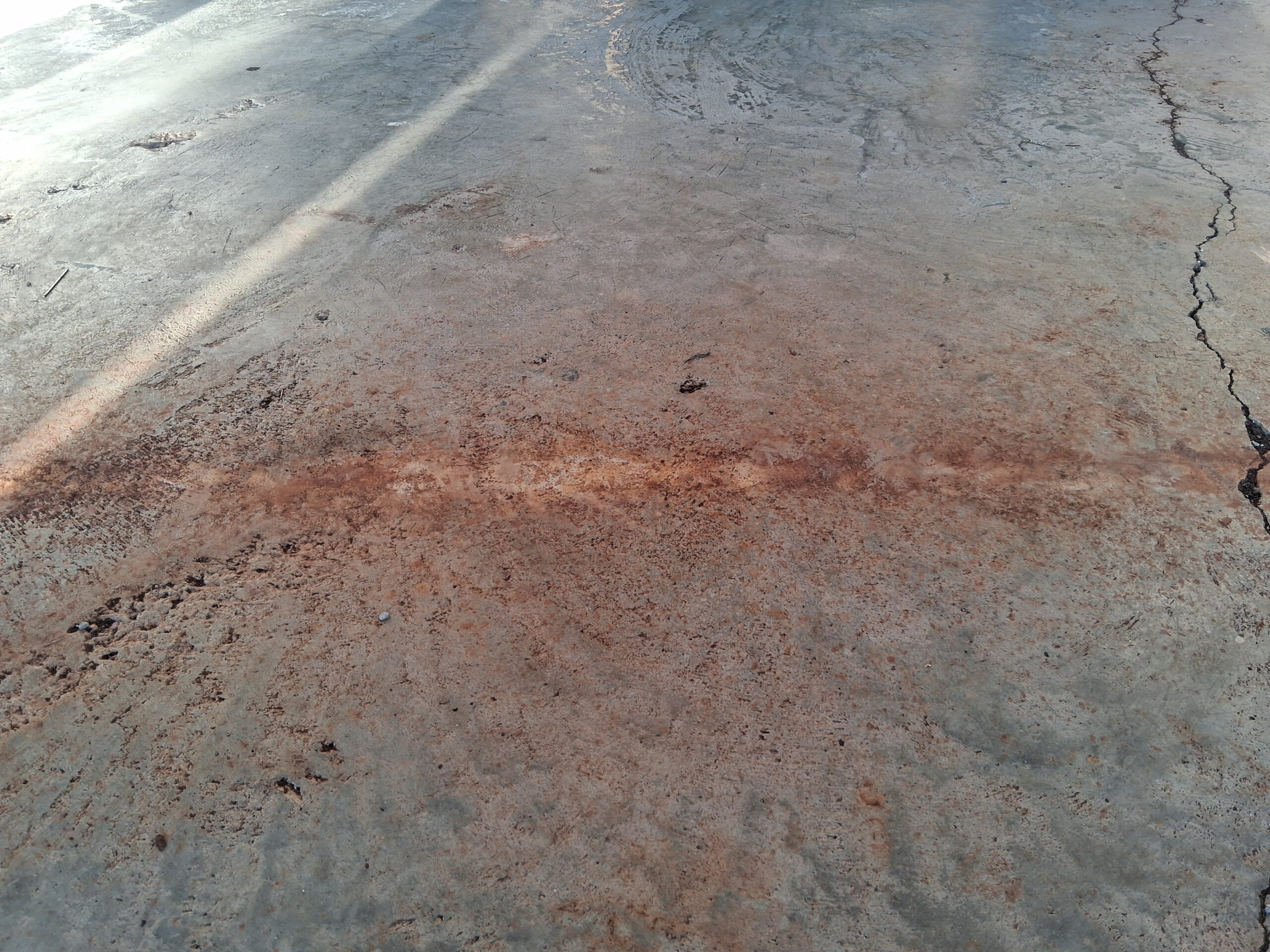
Runoff: what’s normal and what’s a problem
This is the question I get more than any other from landscape architects speccing Corten for the first time: what happens to the concrete or stone around it?
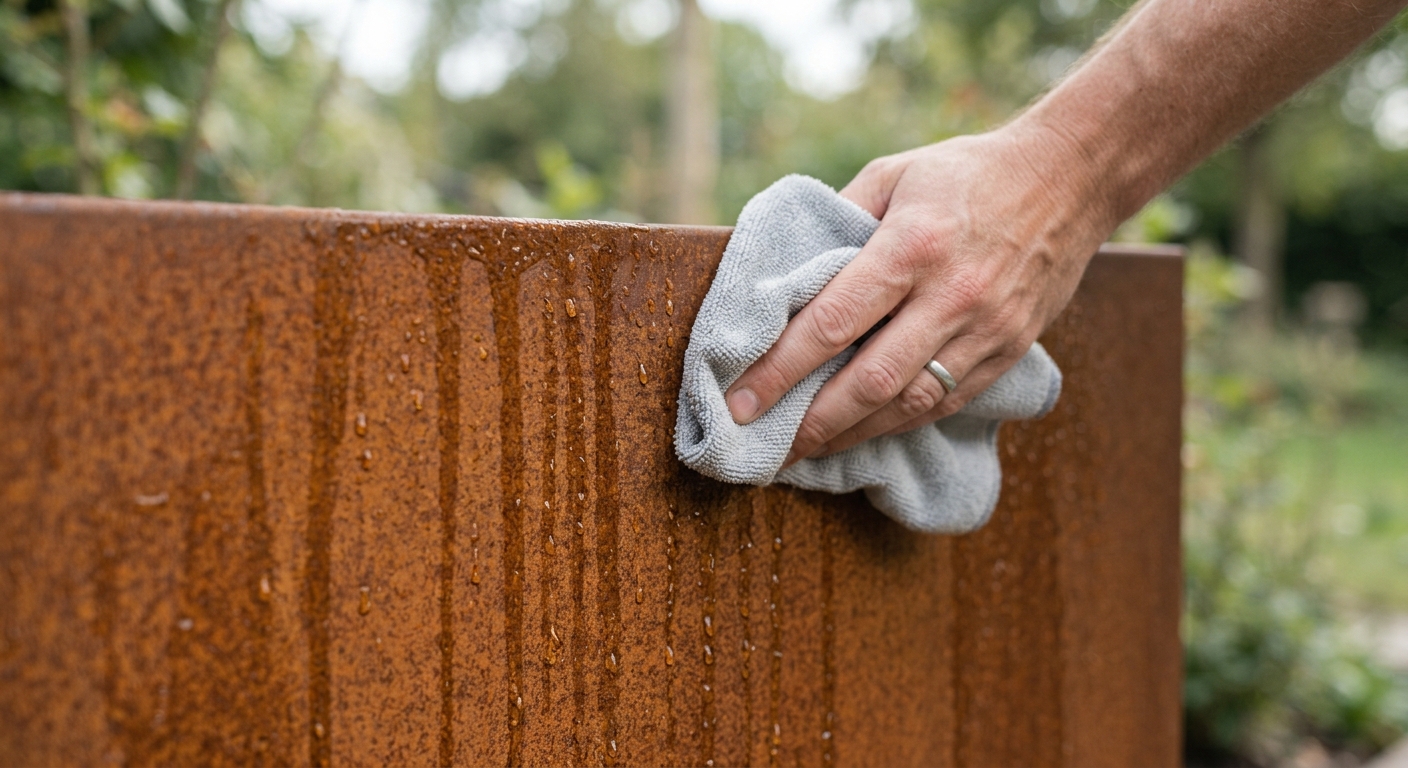
The honest answer is that Corten runoff will stain. During the active patina period — roughly the first year to eighteen months — iron oxide particles wash off the surface with the water flow and deposit on whatever they land on. On unsealed concrete, natural stone, or light-colored pavers, this shows up as orange-brown staining.
This is not a defect. It’s a property of the material. But it needs to be planned for.
⚠ Normal runoff: light orange tint in the water, minor staining on surrounding surfaces during the active patina period. Problem runoff: heavy rust sediment collecting in the basin, dark streaking on surrounding hardscape, or staining that continues at the same intensity beyond 18 months without slowing down.
How to manage it:
- Seal any concrete, stone, or pavers in the immediate splash zone before the feature goes live. A penetrating sealer on the surrounding hardscape makes runoff staining much easier to clean and prevents it from setting permanently.
- Orient the feature drainage so runoff flows away from light-colored surfaces where possible. Work this into the site design before installation.
- During the first year, periodic cleaning of the surrounding surfaces with a mild acid wash (CLR works well) removes iron oxide deposits before they set.
- Communicate the timeline to the client before installation, not after they call you about orange water. A client who expects runoff for the first year is fine. A client who was never told is a problem.
What Corten cannot do — and where I’ve seen it misused
Corten is a great material in the right application. It’s also a material I’ve seen misused in ways that cause real problems, so let me be direct about the limitations.
⚠ Do not use Corten as a basin. I’ve seen other water feature manufacturers build basins out of Corten and it is not the right call. The basin is permanently submerged — there’s no wet-dry cycle, ever. The patina cannot stabilize in constant submersion, and the material will continue to corrode through. I’ve spoken directly with Corten steel manufacturers about this. Their position is clear: constant submersion is not an appropriate use of the material. Every basin I build is 304 stainless, regardless of what the exterior finish is.
Beyond the basin issue, Corten on a water feature runs wetter than Corten on a building. The continuous water flow means the patina takes longer to stabilize and the maintenance requirements are higher. This isn’t a reason not to use it — it’s a reason to go in with the right expectations and maintenance plan.
Maintenance: Corten is not a set-it-and-forget-it material
I want to be straight about this because I think it sometimes gets undersold. Corten is lower maintenance than mild steel. It is not zero maintenance — especially on a water feature.
What a Corten water feature needs:
- Regular cleaning of the basin and surrounding surfaces. Hard water will calcify on Corten the same way it does on stainless. Calcium buildup traps moisture against the surface and can accelerate corrosion in ways the patina is not protecting against.
- Fresh water rinse of the surrounding hardscape during the active patina period to manage runoff staining before it sets.
- Annual inspection of any areas where water contacts the Corten directly at high volume — the top edge where water sheets over, the base where it collects. These are the highest-wear zones.
- On areas in direct constant water contact, a two-part automotive epoxy clear coat can be applied to the affected surface. It makes cleaning easier and slows the patina process in those specific zones, which can be useful on features where you want a more controlled appearance over time.
The short version for your clients
Corten is a living material. It changes. That’s the design intent, not a flaw. Here’s what to tell them:
- The feature will look different at six months than it did at delivery, and different again at two years. The color deepens and settles over time.
- Some runoff and staining of surrounding surfaces is normal during the first year to eighteen months. Seal the hardscape before installation and clean periodically during that period.
- It needs regular maintenance — basin cleaning, hardscape rinsing, annual inspection. It is not a install-and-ignore product.
- The basin is always stainless steel, not Corten. That’s intentional and non-negotiable.
- After the patina matures — typically by year two — the appearance stabilizes and the maintenance load decreases significantly.
A client who understands all of this before the feature goes in is a satisfied client at year two. A client who wasn’t told any of it is a phone call you don’t want to have.
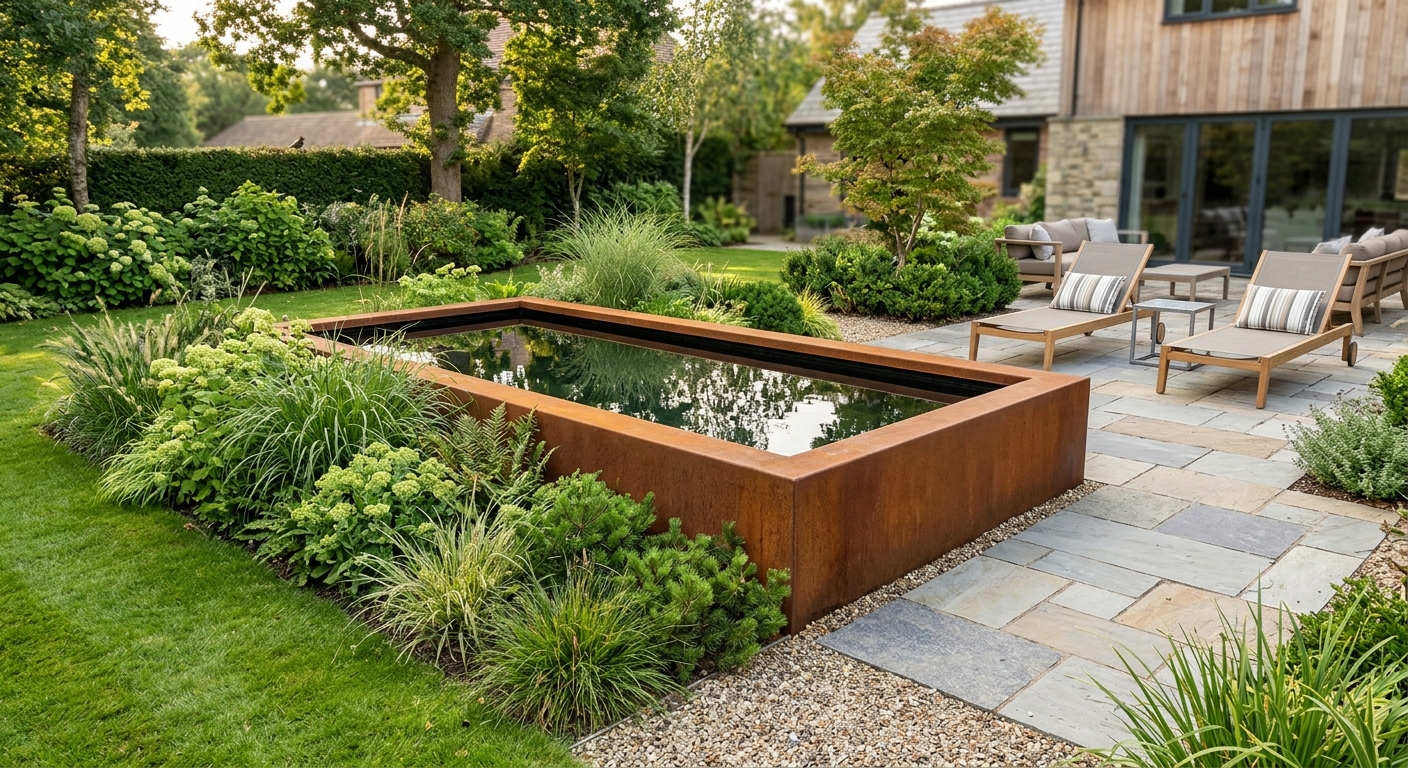
Spec a Corten water feature and want to talk through site conditions, maintenance planning, or finish options? That’s exactly the kind of conversation I have before anything gets built.
Reach out at fountainmetalworks.com or call (928) 274-2697. Or Schedule a Consultation.
Fountain Metalworks fabricates custom Corten rain curtains, stainless reflection pools, and architectural water features for landscape architects and contractors nationwide. Built in Tucson, Arizona. Shipped to your site.