One of the most common hesitations from contractors and designers who haven’t worked with us before is a simple one: “You’re in Arizona. My project is in Florida. How does a custom metal water feature get from your shop to my job site in one piece?”
It’s a legitimate question. A custom-fabricated stainless or Corten water feature isn’t a box of parts — it’s a precision-built product with finished surfaces, plumbing, and sometimes electrical components, traveling hundreds or thousands of miles on a freight truck. Getting that right takes planning, the right materials, and a clear process on both ends.
This post covers exactly how we do it — how we crate, how we ship, what transit looks like to our main markets, and what needs to happen on your end before the feature arrives.
How we build the crate
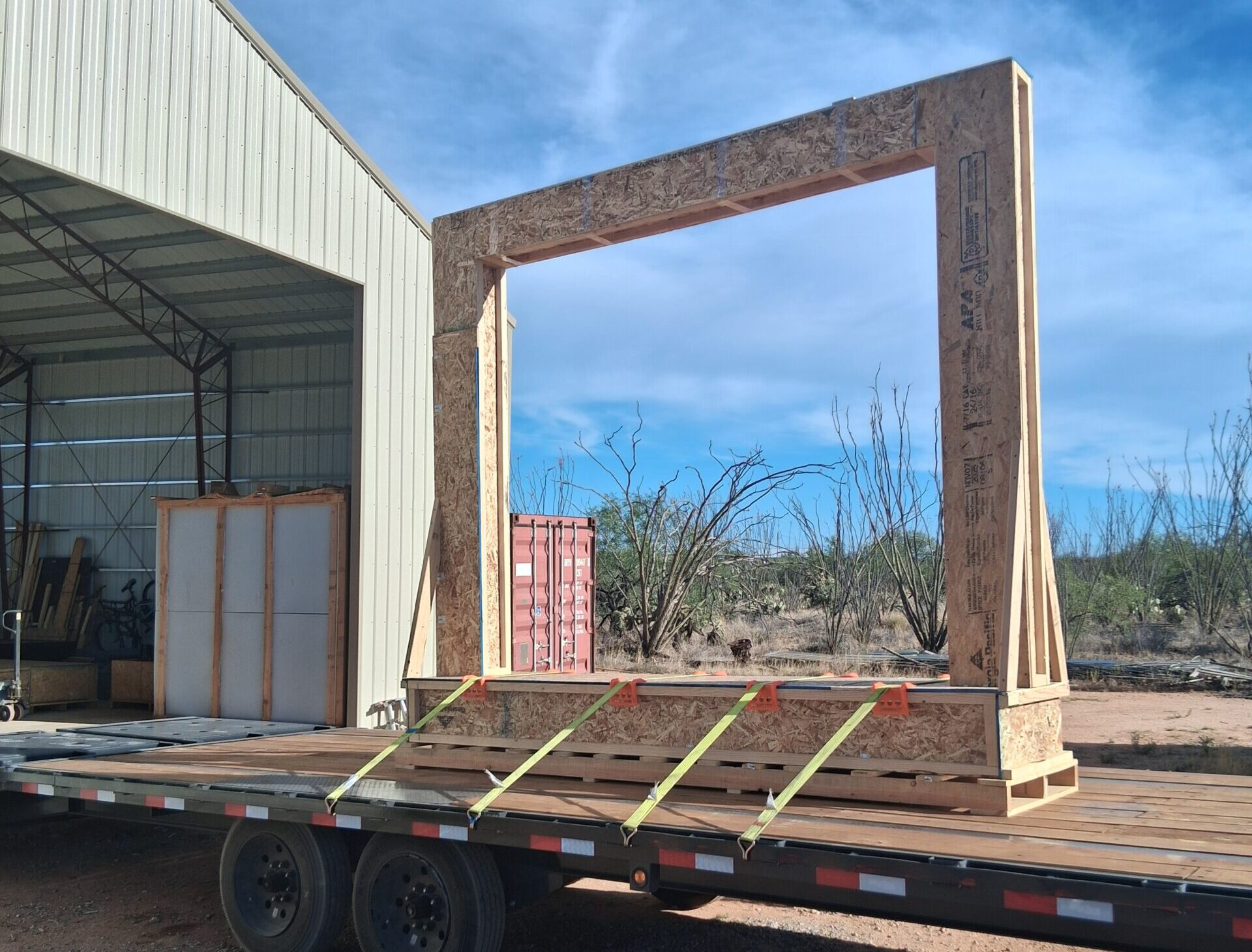
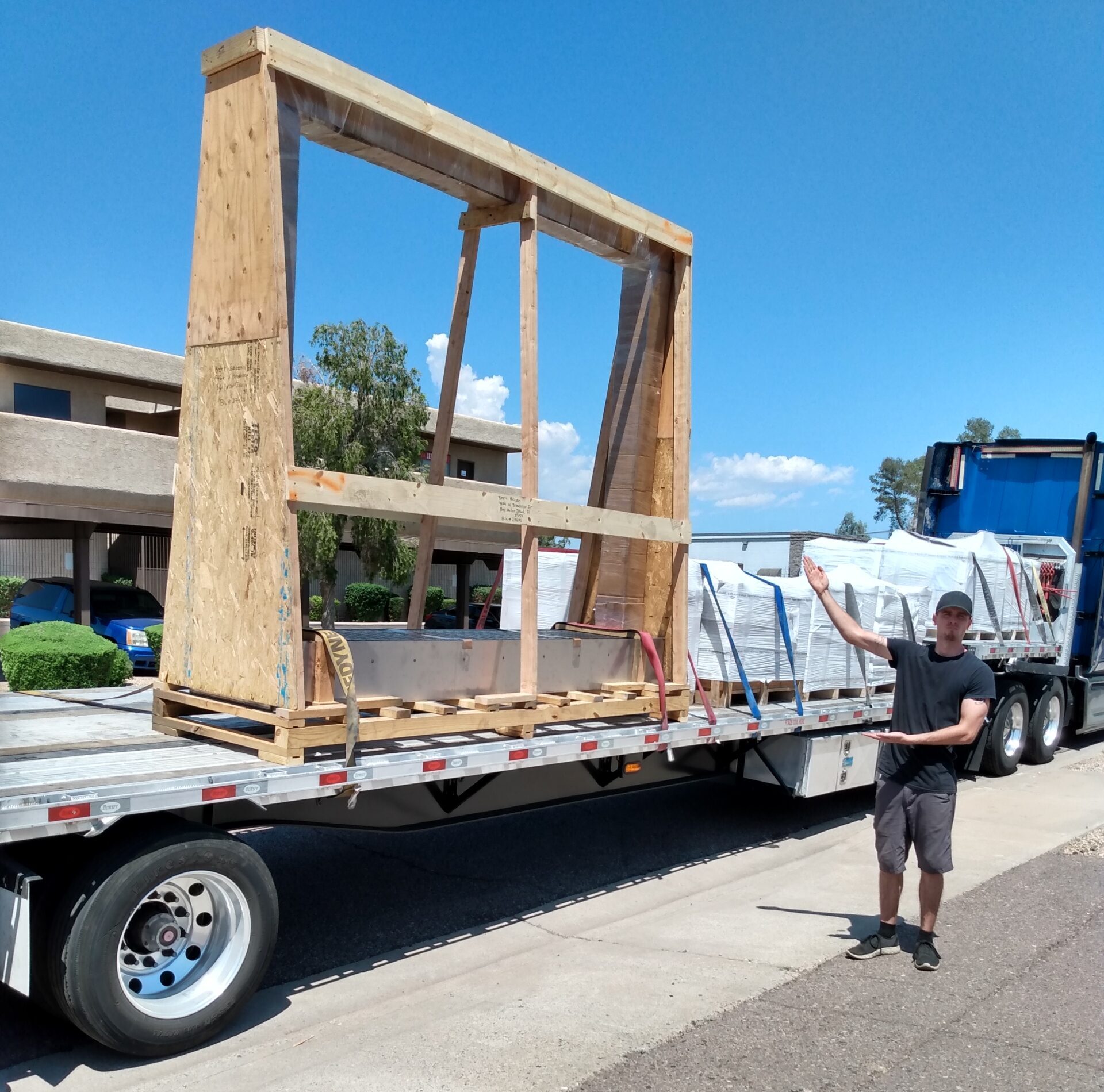
Every crate we build is custom. Because every water feature has a different shape and size, there’s no standard crate we pull off a shelf — we build one specifically for that feature, every time.
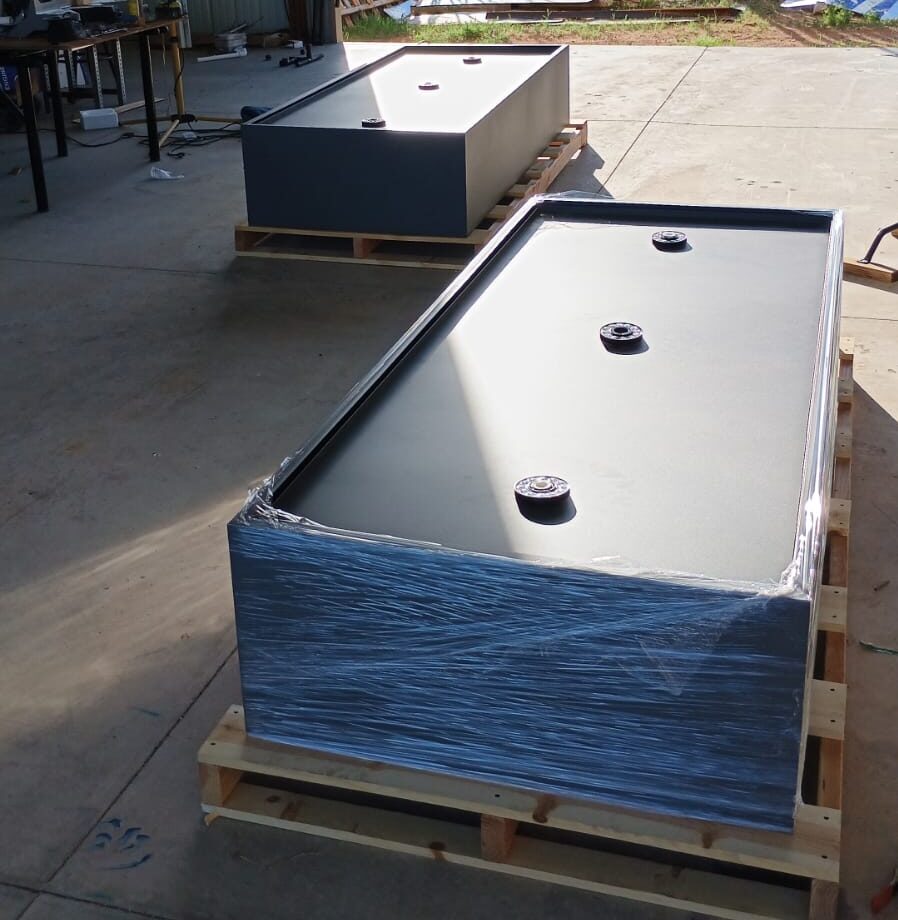
The process starts with a standard wooden pallet as the base. We set the feature on the pallet and secured to it before anything else happens. From there, we wrap the feature in foam padding — enough to protect every finished surface — and then shrink-wrap over that. The foam serves two purposes: it protects the surface from any contact with the wood crate, and it creates the tension that keeps the feature from shifting inside the crate during transit. A tight fit with foam cushioning is significantly safer than a loose fit with padding around it.
Once we wrap the feature and secure it to the pallet, we build the crate around it using OSB sheeting, two-by-fours, and one-by-fours. The crate tends to follow the shape of the feature — an L-shaped feature gets an L-shaped crate, a long narrow reflection pool gets a long narrow crate. We’re not trying to fit the feature into a standard box; we’re building the box to fit the feature.
One detail that matters for the contractor on the receiving end: all crates are assembled with screws, not nails. You can take one apart with a drill or a screwdriver. You don’t need a pry bar and you don’t need to worry about damaging the feature trying to open the crate. Where the opening sequence matters — on larger or more complex crates — we mark it directly on the wood.
How we ship — LTL freight and hotshot options
The standard shipping method for most water features is LTL freight — Less Than Truckload. This means the crate travels on a shared truck with other freight, which keeps costs lower than booking a dedicated truck. We work with established national freight carriers and have dialed in the process for shipping through the USA.
For oversized features or deliveries to residential addresses with difficult access — long driveways, narrow streets, no space for a standard freight truck to maneuver — we’ll use a hotshot trailer instead. A hotshot is a dedicated smaller truck that can get into places a 53-foot freight carrier can’t. It costs more, but it’s the right tool for the job when site access is a constraint.
Some freight carriers also offer a forklift delivery option for an additional fee. This works well on commercial sites where the unloading options are limited. We discuss delivery method and site conditions with every client before the feature ships — it’s not a decision to make after the truck is already on the road.
LTL freight is cost-effective for most deliveries. Hotshot is the right call for difficult residential access or oversized features. We determine which method makes sense based on your site before we book anything.
Transit times to our main markets
We ship out of Tucson, Arizona. Here’s a realistic picture of transit times to our primary markets under normal conditions:
California (Southern): 2 – 3 business days
California (Northern): 3 – 4 business days
Texas: 3 – 4 business days
Florida: 7 – 10 business days
Pacific Northwest (WA, OR): 4 – 5 business days
East Coast (general): 10 – 14 business days
Midwest: 5 – 7 business days
These are estimates under normal freight conditions. Weather events, carrier delays, and peak shipping periods can extend these timelines. We track every shipment from the time it leaves the shop and communicate proactively if anything changes.
One way we sometimes reduce shipping cost: if the delivery can go to a business address rather than a residential address, the carrier waives the residential delivery fee — typically around $125. If the project site is a commercial address or the contractor has a business location nearby, it’s worth discussing whether the feature can be received there instead.
What needs to be ready on your end before delivery
A water feature arriving at a job site that isn’t ready is a problem that costs everyone time and money, not to mention the potential for damage increases. Here’s what needs to be in place before the feature ships:
- Installation location finalized: the feature needs somewhere to go. If it’s going on a concrete pad, that pad needs to be poured and fully cured before the feature arrives — not in progress.
- Anchor plan confirmed: if you’re anchoring the basin to the concrete pad, know where the anchors are going and have the hardware ready. This affects site prep before delivery.
- Utility stubs in place: for reflection pools with the vault system, stub up electrical conduit and water supply to the vault location before you set the feature. Confirm stub-up location and depth with us before the pour.
- Delivery access confirmed: does a freight truck have reasonable access to the delivery point? Is there a loading dock, or does the driver need a liftgate? Is the driveway wide enough and firm enough for a truck? Address this before the feature ships, not the day of delivery.
- Someone present to receive it: this one is non-negotiable. More on this below.
⚠ Do not leave a crated water feature outdoors for an extended period. If the crate gets wet — rain, sprinklers, standing water — moisture can work its way into the foam and contact the finished surfaces, causing water stains before you even install the feature.
What to do when the crate arrives
The moment the crate is delivered, inspect it before the driver leaves. Look for visible damage to the crate itself — crushed corners, broken boards, evidence of impact. If the crate looks compromised, note it on the delivery receipt before signing and photograph everything.
Once the driver is gone, open the crate promptly. Don’t let it sit unopened for days. You have a limited window to file a freight claim if there’s damage inside, and documentation is everything in that process.
If you find damage to the feature:
- Photograph everything immediately — the crate, the packaging, and the feature itself from multiple angles.
- Contact Fountain Metalworks right away — don’t wait, don’t attempt repairs, don’t install it. Call us first so we can assess the damage and start the claims process with the carrier.
- Do not discard the packaging — the freight carrier may need to inspect it as part of the claim. Keep the crate and foam until the claim is resolved.
In our experience, freight damage is rare when features are properly crated — and we take crating seriously. But freight is freight, and things happen. The key is responding quickly and documenting thoroughly. We stand behind every feature we ship and will make it right.
The Florida story — and why someone needs to be on site
I’ll share a situation that taught me to be very direct about this requirement upfront.
A few years back, we shipped a water feature to a client in Florida. The client didn’t live at the delivery address — the feature was going to a property, not their primary residence. The delivery window was tight, and the client made clear they weren’t willing to have someone else receive it on their behalf if they weren’t personally present.
We coordinated the shipping timeline carefully. Features going from Arizona to Florida take roughly a week to ten days via LTL freight under normal conditions. What we didn’t account for was weather — it was hurricane season, and the freight carrier delayed the delivery due to conditions in Florida. The new delivery window no longer aligned with when the client was at the property.
The delivery was refused at the terminal. The crate sat at the freight terminal, and the carrier started charging a daily storage fee. I had to find a local moving company in Florida, coordinate with them to drive 40-plus miles to the terminal, pick up the crate, and store it at their facility — paying out of pocket for all of it — until the client returned and we could arrange a new delivery. The whole situation cost me money that I never recovered, and it was entirely avoidable.
What I now make clear to every client before a feature ships:
Someone must be available to receive the delivery — not necessarily the client personally, but a designated person at the delivery address who can be there when the truck arrives. Freight schedules are estimates, not guarantees. Weather, carrier delays, and routing changes happen. If the delivery window shifts and nobody is available to receive it, the consequences — missed delivery fees, terminal storage charges, redelivery coordination — fall on everyone. Plan for flexibility on the receiving end.
The pre-ship checklist — what we confirm before anything leaves the shop
Before any water feature ships, we go through the same set of questions with every client:
- Delivery address confirmed — residential or commercial, and any access constraints noted.
- Liftgate requirement confirmed — if the site has no loading dock or forklift, we book liftgate service before the feature ships.
- Receiving contact confirmed — a named person at the delivery address who will be available during the delivery window.
- Site readiness confirmed — concrete cured, utilities stubbed, installation location finalized.
- Shipping method selected — LTL or hotshot based on site conditions and feature size.
- Client notified of tracking information — we send tracking details as soon as the feature is picked up so you can monitor progress.
If any of those items aren’t resolved, the feature doesn’t ship. It’s not about being difficult — it’s about making sure a significant custom-fabricated product arrives safely and goes in without complications.
The short version
We ship custom water features from Tucson to job sites across the country, regularly. California, Texas, and Florida are our primary markets, and we’ve dialed in the process for those routes. Every feature is custom crated, foam-wrapped, screwed together for easy opening, and tracked from the shop to your site.
What we need from you: a confirmed delivery address, a person available to receive it, a site that’s ready for installation, and communication if anything changes on your end. We’ll handle the rest.
Questions about shipping to your site, access requirements, or delivery logistics? Reach out before you place an order and we’ll talk through the details. Schedule a consultation now.
Reach out at fountainmetalworks.com or call (928) 274-2697.
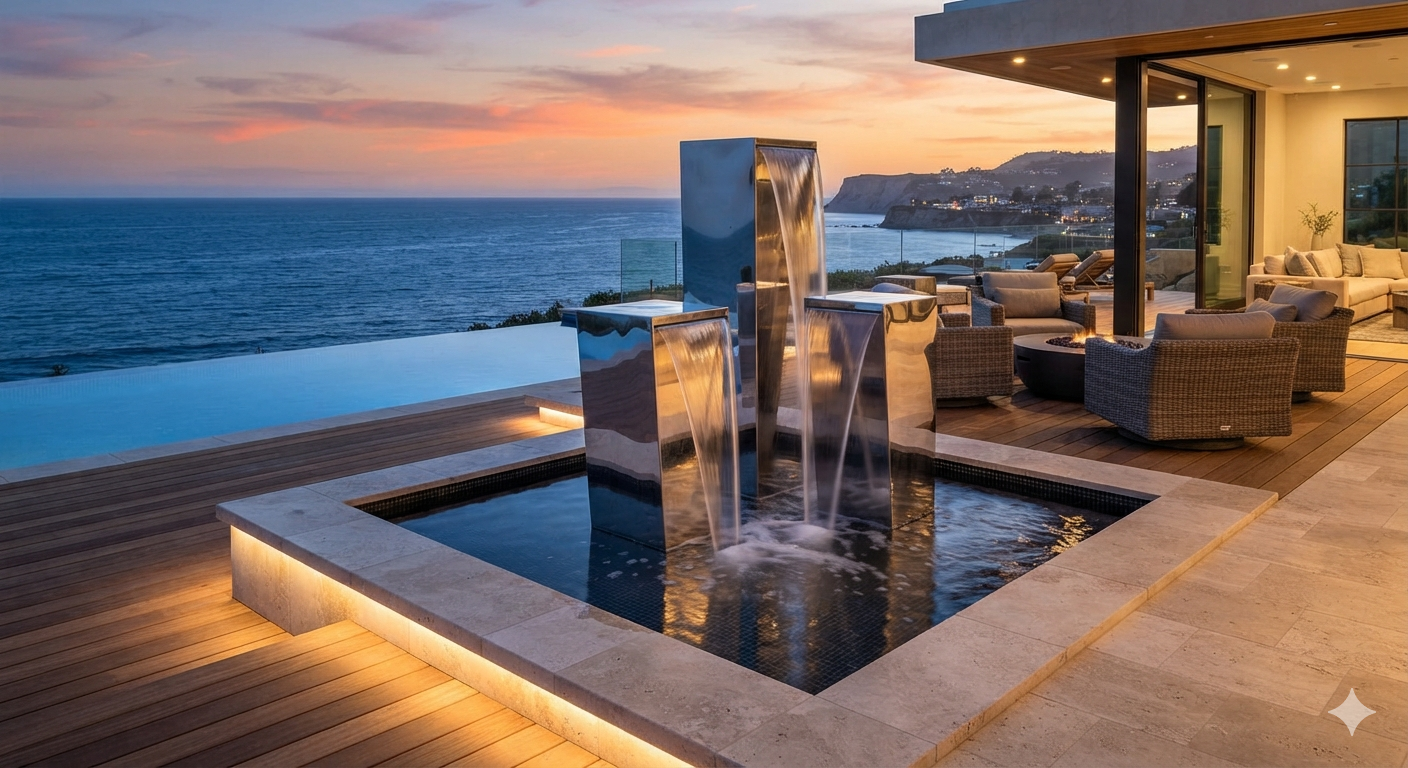
Fountain Metalworks fabricates custom rain curtains, reflection pools, stainless basins, and Corten water features for landscape architects and contractors nationwide. Built in Tucson, Arizona. Shipped to your site.