And Why Getting This Right Upfront Saves Everyone Time, Money, and Frustration
I’ve been quoting custom water features for years. In that time I’ve noticed a clear pattern: the projects that go smoothly start with one conversation — a direct, detailed conversation with the person who is actually going to oversee the installation. The projects that get complicated almost always trace back to information that was incomplete, passed through too many hands, or simply never confirmed before fabrication started.
This post is for landscape architects, contractors, and project managers who are about to call a fabricator for the first time. Here’s what’s necessary to have ready, why each item matters, and what happens — sometimes expensively — when it’s missing.
First: Get the right people in the conversation from the start
Before we get into specs, there’s a process issue worth addressing directly.
I’ve had projects where the first call came from a general contractor, I provided a quote, and then started receiving calls from multiple landscape architecture firms — all asking for a quote on the exact same feature. What I eventually pieced together was that the GC had put the project out to bid, and several landscape companies were bidding on the installation of something I’d be fabricating. Nobody told me that’s how it was structured. And each conversation had slightly different results. In order to get a quick quote, some responses might be improvised without knowing the actually answer.
Eventually the GC selected a landscape firm, that firm reached out — but they had been given a different timeline than the one I’d originally been working toward, and by that point the project had been handed down from the landscape architect to the lead installer, who had their own set of questions that didn’t line up with what the people above them had already discussed with me. It came together eventually, but it took far more time and communication than it should have.
If there’s a team on the project, let’s get on the same page.
I’m currently working on a large municipal project where the same dynamic is playing out. I provided an initial bid to the GC over a year ago. Since then I’ve revised the bid multiple times as various trades weigh in, location and dimension changes etc.. I still haven’t spoken directly with the person who will physically oversee the installation. Questions keep coming in from different directions, and it’s clear the trades aren’t all talking to each other. The project only received some clarity once I could get all parties on call to address all of their questions and concerns at once. Now the project, at least on my end, is running a bit more smoothly because we are all on the same page.
The single most valuable thing that can happen at the start of a water feature project: connect the fabricator (FMW) directly with the person(s) who will oversee the design and installation. Not the GC’s project manager unless they are the designated point person. Not the landscape architect’s coordinator unless they are directly involved with the water feature aspect of the project. The hands-on lead. That’s the person whose questions actually need answering, and getting to them early eliminates most of the friction that develops later.
Landscape architects, in my experience, tend to come to this conversation well-prepared. They typically know exact dimensions, have a clear finish preference, and can give a realistic installation timeline. Contractors tend to have more general information and often pass the detail work to a subcontractor after initial contact. Neither is wrong — but knowing who you’re talking to helps me calibrate the conversation.
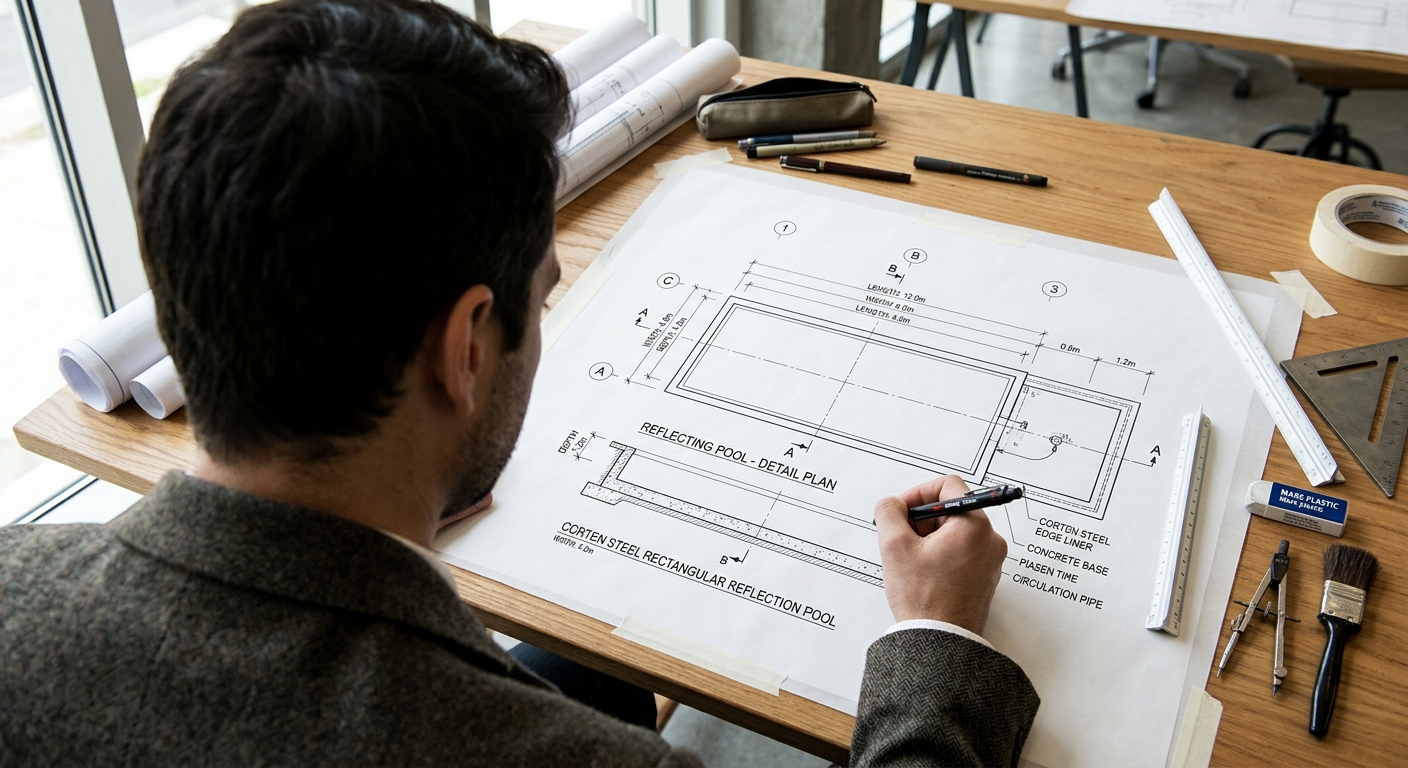
The specs I need before I can quote anything accurately
Here’s what I ask for on every project. Some of these seem obvious. Several of them get overlooked regularly, and every one of them has caused a problem at least once when it was missing.
-
Exact dimensions — and which direction they run
Width, height, and depth. All three. And confirm which dimension is which — this sounds basic but it matters more than you’d think. And often times there are more than several sets of dimensions. One set for the basin, another set for the top structure or even a separate section of the same water feature.
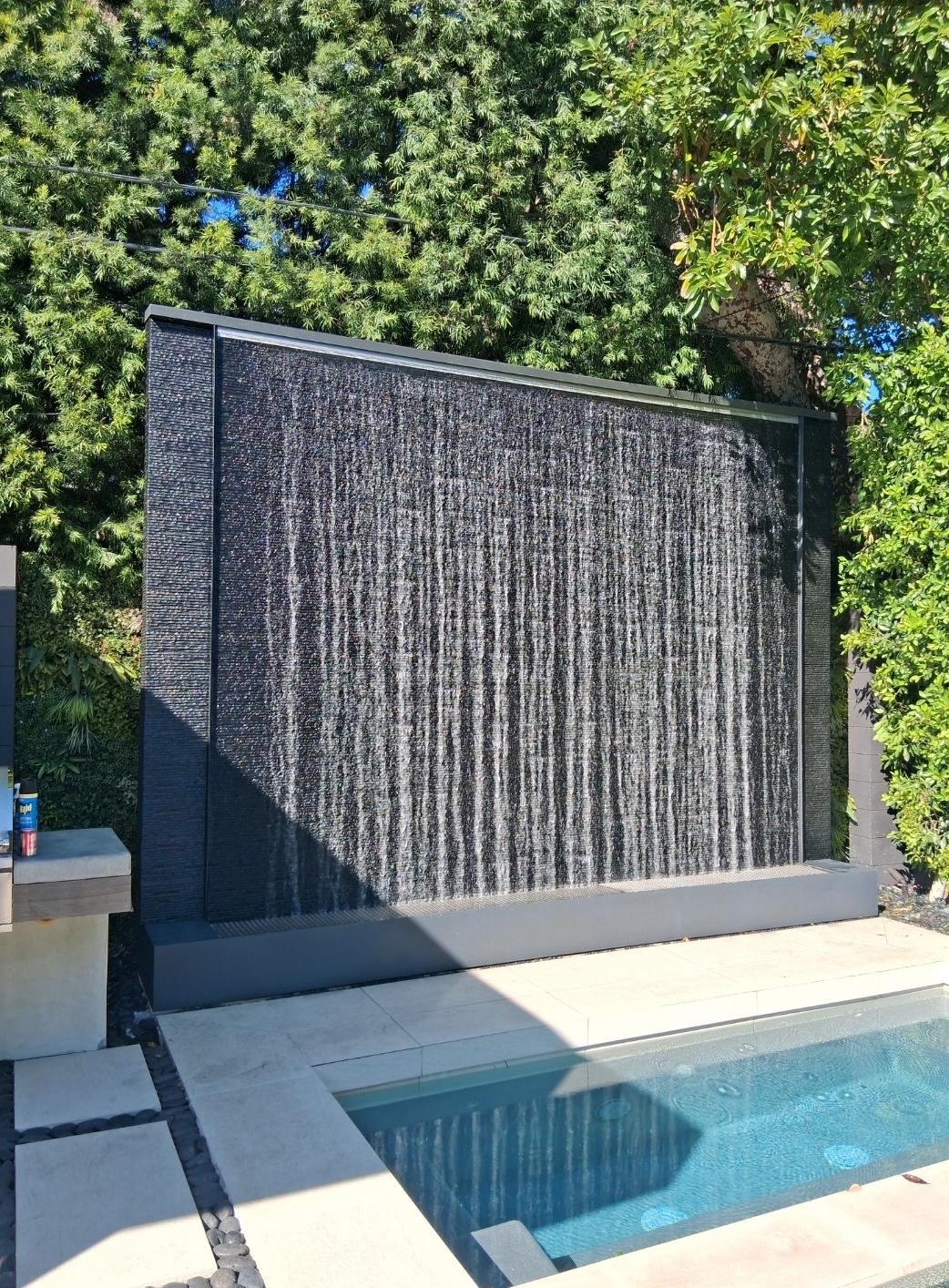
I had a rain curtain ordered for a project in California. The landscape designer specified a 7-foot tall by 4-foot wide Corten Rain Curtain water feature. I built it, shipped it, and on delivery day got a call from the landscape project manager: the dimensions were reversed. They needed a 4-foot tall by 7-foot wide feature.
The dimensions were first seen in an email, then confirmed on the invoice by the designer however they didn’t confirm with the project manager on their side. By luck, I had that exact configuration they needed in my shop from a trade expo I’d just wrapped up. The client returned the delivered water feature at their own cost, paid crating and shipping on the expo unit, and walked away having spent about $1,000 to fix a $6,500 mistake. That almost never works out that cleanly. Double-check your dimensions on your end and confirm my invoice sent to you before making the deposit.
-
Finish and material preference
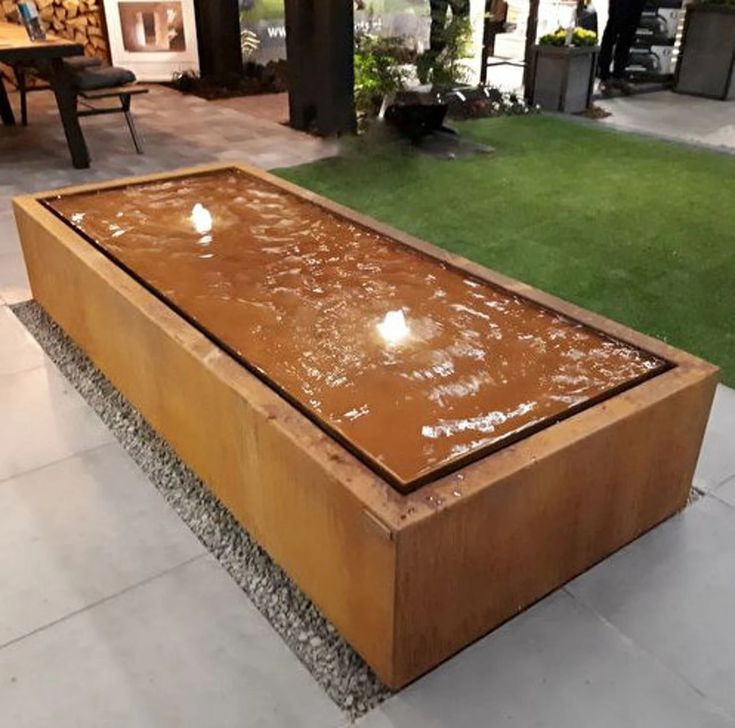
Corten, 304 or 316 stainless, powder coated, faux stone, stainless steel mesh— each has different material costs, lead times, maintenance requirements, and appropriate environments. If you’re not sure which finish is right for your site conditions, that’s a conversation worth having before the quote, not after.
For coastal or poolside installations specifically, material grade matters — 316 stainless is recommended over 304 stainless in chloride-heavy or ocean air environments. I covered this in detail in an earlier post. The point here is that “stainless” isn’t a single answer — knowing the environment lets me spec the right material from the start.
-
Site conditions and utility locations
Where is the water source? Where is the electrical stub-up? Which side of the feature do these need to come in on? For reflection pools with the integrated utility vault system, the utility stub-up location needs to be confirmed before the concrete is poured — changing it after the pour is a significant problem.
Does the installation site have a concrete pad, or is one being poured? If anchors are needed to secure the basin to the pad, those need to be factored into the quote and the feature needs to be built to accommodate them. Adding anchors at the last minute after powder coating, means grinding off the powder coating, welding and sending the entire water feature back to the powder coater. That could mean an unexpected $1000 or more increase in the cost.
-
Assembly and delivery requirements
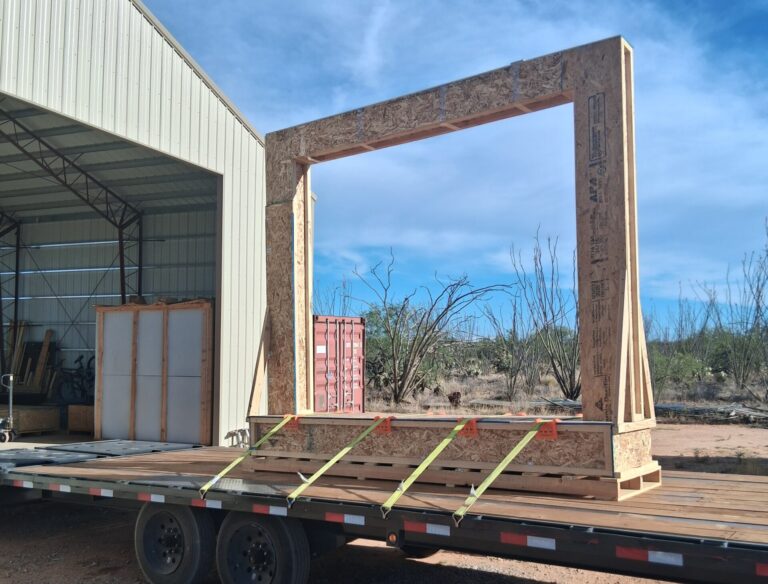
Can the feature arrive fully assembled, or does site access require it to ship in sections for on-site assembly? A fully assembled 14-foot reflection pool is a very different delivery than the same feature shipped in two sections. The fabrication approach, crating, and cost are all different.
Delivery address — residential or commercial — affects shipping cost. Liftgate requirement affects shipping cost. Forklift availability on site affects how the feature gets unloaded. I need all of this before I finalize a shipping estimate, and it needs to be accurate. A residential delivery fee that wasn’t anticipated, a liftgate that wasn’t booked, a forklift that wasn’t available — these are real costs that show up as surprises if the conversation didn’t happen upfront.
-
Realistic timeline — and a commitment to communicate changes
I need a realistic installation date, not an optimistic one. If the timeline shifts — and on larger projects it almost always does at some point — I need to know as soon as you know. A finished water feature sitting in my shop past 15 days starts incurring a storage fee. That’s not punitive — I have limited shop space and a finished feature that isn’t shipping occupies it.
On several occasions the information I have has me fabricating and shipping quickly because the project is behind. I want to help and will do my best to get the water feature out as quickly and as professionally as possible. However, when I call to say I’m ready to ship and I’m told, “can you hold it for several weeks?” What happened to the house on fire urgency? Now I need to store it some place safe so it won’t damaged while I build other water features. If there was a delay, please just inform me and I can pause a project and start back up when things are back on track. It’s much easier to store an unfinished raw stainless project than a powder coated finished project.
More importantly: changes after fabrication has started cost money. A dimension change after materials are cut, a finish change after the surface treatment is done, an assembly change after the water feature is built — all of these have real costs that fall somewhere, and ideally not on the client who communicated clearly and not on the fabricator who built to the spec they were given. The time to resolve uncertainty is before the deposit, not after. I understand that mistakes happen and will do my best to work with any client if changes or modifications do arise.
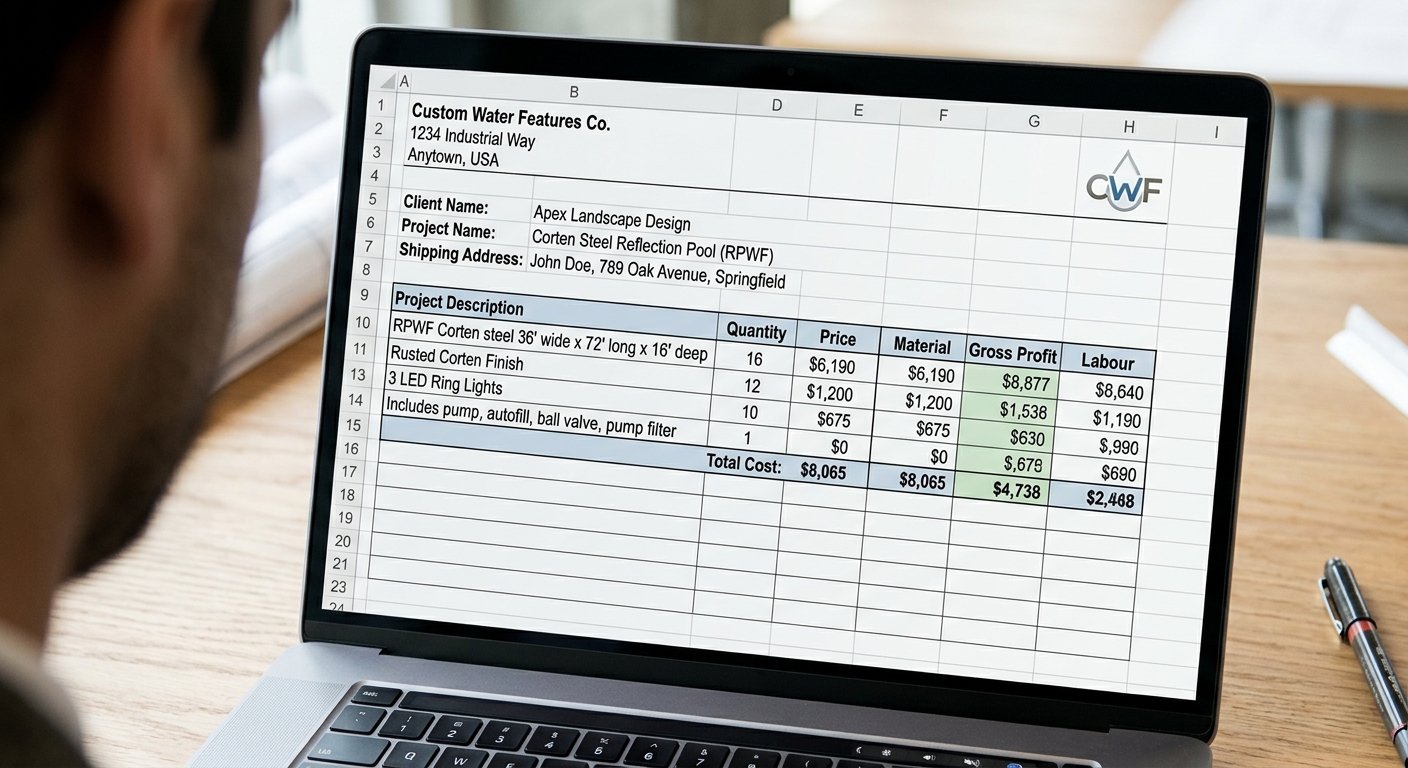
What happens after I have everything I need
Once I have complete information, I send out the invoice and detailed drawings for review before a single piece of material is purchased. This is the last checkpoint — the place where a wrong dimension gets caught, a utility location gets confirmed, a finish decision gets locked in.
Nothing gets ordered, nothing gets cut, nothing gets welded until the invoice and drawings come back approved. That step exists specifically to catch the kind of mistake that happened with the California rain curtain before it becomes a fabrication problem rather than a drawing correction.
Signed-off drawings are the agreement. Changes after that point are change orders. I stay flexible when things happen and work with clients to find solutions, but approving the drawings locks in the project.
The checklist — everything in one place
Before you call or email for a quote, have answers to these please:
- Exact dimensions: width, height, depth — confirmed and double-checked
- Feature type: rain curtain, reflection pool, faux stone, mesh wall, or custom (pictures or sketches help)
- Finish preference: Corten, stainless steel, powder coat, faux stone
- Site environment: coastal, poolside, inland, desert — affects material spec
- Utility locations: which side does electric come in, which side does water come in, do you need a drain in the basin
- Concrete pad status: existing, being poured, or not required — and anchor requirement
- Assembly requirement: fully assembled delivery or sections for on-site assembly
- Delivery address type: residential or commercial
- Liftgate / forklift: what unloading equipment will be available on site
- Realistic timeline: target installation date and any known constraints
- Decision-maker contact: the name and direct contact for the person overseeing installation
⚠ If you’re a GC or landscape architect coordinating multiple trades on a larger project: please make the introduction between your fabricator (FMW) and your installation lead early. The communication that happens directly between those two people is worth more than any number of relayed messages. It saves time, prevents mistakes, and keeps the project moving.
The short version
A well-prepared first conversation gets you an accurate quote faster, reduces back-and-forth, and eliminates the kind of downstream surprises that cost everyone money. The projects I enjoy most — and that go most smoothly for the client — are the ones where someone has done the homework before they pick up the phone or is not afraid to ask the questions up front.
If you’re not sure about some of these details yet, that’s fine — call anyway and we’ll work through it together. But the more you have ready, the faster and cleaner the process from first call to the installed water feature.
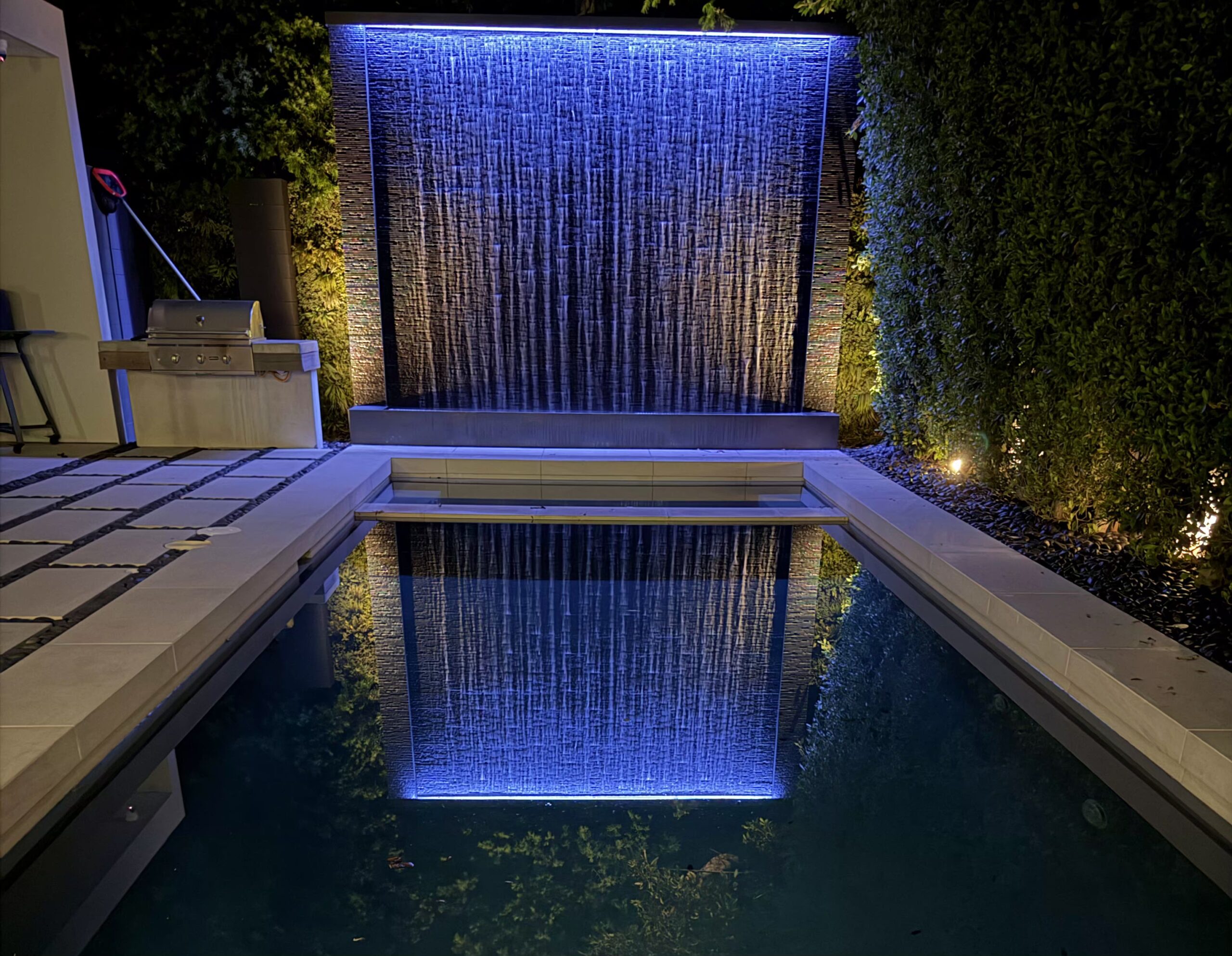
Ready to start a conversation? The more detail you bring, the faster we can get you a quote and into the build queue.
Reach out at fountainmetalworks.com or call (928) 274-2697. Or Schedule a Consultation.
Fountain Metalworks fabricates custom water walls, rain curtains, reflection pools, stainless basins, and Corten water features for landscape architects and contractors nationwide. Built in Tucson, Arizona. Shipped to your site.